


.gif)

Mahendranagar, 11 August
It is found that one of the asanas of Ashtanga yoga is very important not only to stay physically healthy and fit but also to stay mentally positive, healthy, and strong. It is mentioned in Gheranda Samhita that there are eighty-four million asanas. We don't need to do all those asanas, but if we can do some or a small number of them, it will be enough for us.
Maharishi Patanjali defines asana in the Yoga Sutra and says that asana is the state of being in a stable state. In asana, we should practice moving the body to any certain position, after the effort is successful, there is no difficulty in keeping oneself in that position for a long time, and after sitting continuously, the pleasure starts to come from it. In the end, the asana is considered to be accomplished. Asanas are very important in yoga. Because every practice of yoga is possible only by using some asana and the final stage of yoga is the path to reach samadhi. We can use asanas in many ways for a healthy lifestyle.
Asana can be practiced by any person at any age, condition, and time. Yogic asanas include compound subtle exercises and gross exercises, which lead to ease in the asana. Gross exercise warms up the whole body, completes body exercise, and makes it easy to do asana, while micro exercise helps to complete the position of the body in asana easily by exercising the body parts, making them flexible and strengthening, opening the joints, etc.
Types of Asanas
Yoga Asanas can be classified in different ways based on purpose and position. One can practice yoga under the guidance of a guru by paying attention to one's age, physical condition, disease, ability, etc. Here the types and usefulness of those postures are discussed.
Asanas based on the purpose
It can also be classified based on what the asana is done for.
Laborious or active Asana
Most asanas fall under this category. After reaching a certain position by moving specific parts of the body, it is tried to stabilize, this is called Asana. For example Uttanapadasana, Salvasana, Dhanurasana, Trikonasana, Mandukasana etc. These asanas are done to make the body strong, flexible, and fit, to lose weight, even in healthy and unhealthy conditions.
Restful Asanas
Asanas that are practiced to relieve fatigue and relax during active asanas, physical exercises, etc. are called restful asanas. Like - Shavasana, Balasana (Balasanasana), Makrasana etc. These asanas can be used to remove mental and physical problems, strengthen the mind, and remove problems such as high and low blood pressure, insomnia, pain, fatigue, burning, burning, etc.
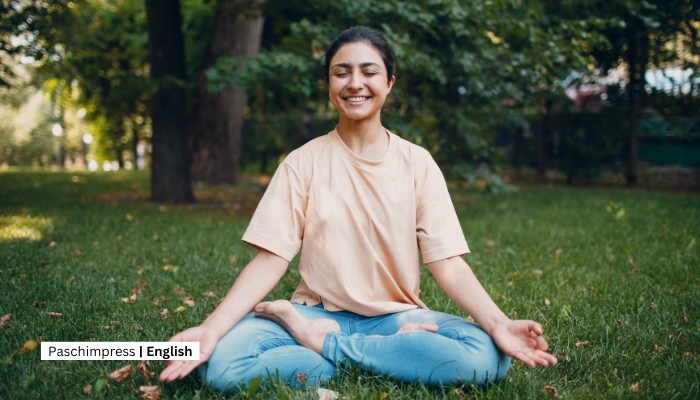
Meditation Asanas Asanas are performed easily for pranayama and meditation is considered very useful. For example Sukhasana, Siddhasana, Vajrasana, Padmasana etc. Meditative posture reduces many problems such as mental instability, restlessness, stress and anxiety disorders, insomnia, high-low blood pressure, diabetes, obesity, and pain.
Balanced Asana
The asana practiced by keeping the body balanced by supporting one leg, both ankles, hands, head, etc. is called a balancing asana. Such asanas include Vrikshasana, Dhruvasana, Tadasana, Natarajasana, Topasana, Vrischikasana, etc. These asanas are used to increase mental concentration, reduce mental illnesses, and have other special benefits.
Stretching and bending Asana
Asanas of this group are practiced by stretching or contracting the parts of the arms and legs. Tadasana, Tiryaka Tadasana, Mushtibandhachakrasana, etc. are practiced while stretched, and Pawanmuktasana, some Mercatasana, Jhulasana, etc. are practiced by bending. Such asanas are useful in making the body strong and flexible and in musculoskeletal and muscular diseases.
Static and running
However, asanas are practiced from the moving state to the stationary state. But some asanas are practiced without doing them in a static position. Asanas that can be sat in a stationary position such as Naukasana, Halasana, Vajrasana, etc., while the asanas that can be done without being stationary include Jhulasana, Padavritasana, Putliasana, Chaladhanurasana, Chalamkarasana, etc. Such asanas make the affected organs strong, fit, and balanced in weight and increase the resistance and endurance of the body.
Therapeutic Asana
Asanas done to treat disease are called medical asanas. These asanas are comfortable and are practiced only in such a way as to give maximum benefit according to the ability, needs, age, and disease of the patient.
Positional Asanas
Sitting Asana
In such a group, asanas are practiced in many ways, such as leaning on the feet, sitting on the hips or knees, and hitting the shoulders. Sukhasana, Siddhasana, Kagasana, Padmasana, Dandasana, Janushirasana etc. are examples of this.
Asana performed by Utano
Asanas that lift the lower or upper part of the body while lying down belong to this group. For example, Uttanapadasana, Naukasana, Hridayastambhanasana, Nabidarshanasana, etc. can be taken.
Kneeling Asana
Asanas that raise the knees, chest, or both parts while lying on the back belong to this group. Bhujangasana, Salvasana, Navyasana (opposite Naukasana), Dhanurasana, Makrasana etc. are the asanas of this group.
Standing Asana
Asanas performed while standing are Hastottanasana, Vrikshasana, Natarajasana, etc.
opposite Asana
Asanas done by making the body exactly opposite or opposite to the usual head up and feet down exercises are called opposite group asanas. For example, Sarvangasana, Vitra Karani Asana, Topasana, etc. are examples of this.
Forward bending Asana
Asanas performed by tilting the body forward belong to this group, such as Hastapadasana, Janushirasana, Paschimottanasana, etc.
Back bending Asana
Asanas practiced by turning the body backward are the asanas of this group, such as Hastottanasana, Chandradarshanasana, Bhujangasana, etc.
Side-turning Asana
Asanas that bend the body from the waist to the right and left belong to this group, such as Tiryaktadasana, Chandrasana, Mushtibandhachakrasana, etc.
Asana is to be done by folding
Asanas done by bending the waist or spine like Meruvakrasana, Katichakrasana, Ardhamatsyendrasana, etc. are the asanas of this group.
Stretching Asana
Some asanas are done by stretching the arms, knees, waist, etc. In this way, stretching is practiced using certain parts of the body, up, down, side, etc.
Mixed group
Many asanas are practiced individually. But in some practice, more than one asana or group of steps is used. For example Surya Namaskar, Chandra Namaskar, Pragya Yoga, Tandava dance etc. Such asanas provide exercise to the whole body and mind in a short time and one can get energy.
Precautions:
Before practicing Asana, you should practice subtle and gross exercises. Compound subtle exercises that move organs such as eyes, face, head, shoulders, arms, chest, waist, and knees should be done daily before asana. In this way, gross exercises such as slow speed (like jogging), fast speed (like running fast), heart speed (doing a rapid breathing process by moving the knees, touching the buttock with the hands, and clenching and spreading the exercise), Udhvargati warms the body together and It performs various functions such as energizing, regulating the metabolism process in the body, increasing the functionality of major organs and systems. Practicing such yogic exercises makes Asan easier.
Any asanas should be practiced in the presence of a Yoga Guru in the beginning. Asana practice should start from simple to difficult asana. People suffering from back pain should not do a forward-leaning posture.
Due to neck pain, head moving exercises should not be done. In this way, those who are crawling should not turn backward. Jumping exercises and asanas should not be done in case of sore legs, knee pain, and torn veins. People who do not exercise for many days, are overweight, have high cholesterol, high blood pressure, low blood pressure, heart disease, diabetes, and need to take insulin in such a way that they are more tired and should not exercise for a long time.
Pregnant women should also practice separately and do only prescribed exercises. In case of weakness, diarrhea, fever, etc., only relaxing exercises should be done. If any joint is swollen and painful, it should not be exercised. You should be very careful even if you have not been cut for four to five months after major surgery, you have just given birth to a child, you are old age, etc. While practicing, wear comfortable clothes, choose a clean room or another place with double air penetration, choose a quiet environment, and do asanas in Brahmamuhurta all morning. What is the method of breathing while doing it? Proper rules should be followed about that.
Benefits of Asana
Many physical and mental benefits are obtained by practicing Asana. It increases and strengthens the functionality of respiratory, circulatory, bone-joint, muscle, reproductive, endocrine, digestive, excretory, etc. systems. Asana is also important in detoxification, relaxation, flexibility, etc. of the body. Just by sitting in a meditative posture, the mind feels calm, stress and anxiety free. Practicing asanas makes the body healthy and provides protection from diseases and is beneficial in many physical, mental, emotional, and psycho-physical problems. It helps to get rid of many symptoms that come in the body due to many reasons such as - stinging, burning, pain, sleepiness, flickering, soreness and discomfort, tingling, dryness, etc.
Practice some postures
Sukhasana: This is a simple meditative posture. Sit in a squat position and keep your spine straight and relaxed. Keep both hands on the knees and turn the palms upwards, and straighten the remaining three fingers. This is called Jnanamudra. Sit with the eyes on the tip of the nose and then sit comfortably and quietly. Breathing long but subtle, focus continuously on the breath going in and out. It reduces stress, brings peace and happiness to the mind.
Natarajasana
Stand and while balancing the body, bend the right knee from behind and hold the heel joint firmly with the right hand. Keep your arms straight in front and turn your palms upwards. The thieving and elder fingers are joined together and the remaining three fingers are straight and placed in Jnanamudra. Explode the held back leg away from the body. Balanced and fallen, take heed. In the beginning, you can practice by touching the wall or with someone's help. After practicing this for a while, change the other leg and hand.
benefit
It makes the body balanced and fit and strong. Increases concentration in the mind. Helps to solve mental problems. Makes hands and spine strong.
caution
Most obese people do not. Practice by not falling.
Hashyasana
The method of laughing in different ways by sitting, standing or walking is called Hashyasana or Hashyayoga.
benefit
Hashyasana or Hashya Yoga helps to remove many physical and mental diseases. It provides happiness and joy in life. It is useful in managing stress, anxiety etc.


