


.gif)


The relentless march of technological advancement in society has accelerated over time. As a direct consequence, our lifestyles are continuously and profoundly revolutionized. The monumental invention of the Internet, coupled with explosive growth in the field of Information Technology (IT), has fundamentally changed how we perform an ever-widening array of activities. Computers and handheld devices now provide an online gateway to a world of possibilities, phenomenally transforming our entire planet into a closely interconnected global village.
The cybersecurity landscape in Nepal faces significant challenges despite the country's recognition of the importance of security and privacy. The regular broadcasting of news and reports on cybersecurity breaches by the media and police department highlights the pervasive nature of the problem. Several factors contribute to the risky and challenging IT environment in Nepal:
Increasing Cyber Threats:
The frequency of cybersecurity incidents reported in the media indicates a rising trend in cyber threats faced by individuals, businesses, and government entities in Nepal.
Limited Cybersecurity Policies and Regulations:
Despite the acknowledgment of the importance of cybersecurity, the existing policies and regulations may not be comprehensive or up-to-date enough to effectively address the evolving nature of cyber threats.
- Lack of Cybersecurity Awareness:
Many users may not be sufficiently aware of cybersecurity best practices, making them more vulnerable to cyber-attacks. This lack of awareness can extend to both individuals and organizations.
- Insufficient Investment in Cybersecurity Infrastructure:
Adequate investment in cybersecurity infrastructure, including advanced tools and technologies, is crucial for preventing and mitigating cyber threats. The lack of such investments can leave systems vulnerable.
- Inadequate Training and Skill Development: There may be a shortage of skilled cybersecurity professionals in the country. Insufficient training and skill development programs can result in a gap in the workforce capable of handling cybersecurity challenges effectively.
- Global Connectivity and Interdependence:
Nepal's increasing reliance on global networks and interconnected systems exposes it to a broader range of cyber threats. Cybersecurity incidents in one part of the world can have repercussions globally.
- Rapid Technological Adoption:
The rapid adoption of new technologies without corresponding security measures can create vulnerabilities. This is particularly relevant as Nepal embraces digital transformation and modernizes its IT infrastructure.
- Limited Collaboration and Information Sharing:
Effective cybersecurity often requires collaboration and information sharing among government agencies, private sector entities, and international partners. The absence of robust collaborative mechanisms can hinder cybersecurity efforts.
- The increasing sophistication of cyber attacks makes defense difficult.
- Limited resources hinder organizations from implementing strong cybersecurity measures.
Nepal has seen recent adoption of Information and Communication Technology (ICT) across public, private, and non-profit sectors (established in 2008). This aims to improve service delivery, internal operations, and overall efficiency. While legal frameworks and e-policies support this initiative, challenges remain.
A significant "digital divide" exists, with individuals and institutions lacking access or necessary skills. Additionally, despite optimism about ICT's potential for economic development and poverty reduction, many users lack crucial cybersecurity knowledge, putting them at risk in the face of increasing cybercrime threats.
To fully leverage the benefits of ICT and mitigate cyber threats, Nepal needs to address both the digital divide and user awareness through dedicated efforts.
The number of Internet users in Nepal has exhibited a remarkable annual growth of 50%, escalating from 35,000 users in 2000 to tenfold in 2009. With approximately 30% of Internet services utilized by business employees and 20% each by international organizations and private home users, the nation witnesses a surge in ICT applications and Internet consumption. Notably, the rise in computer users in rural areas is attributed to educational institutions. As you can see, the number of internet users in Nepal has been steadily increasing over the past decade. In 2015, there were approximately 5.7 million users, and by 2023, that number had grown to over 18.6 million. This represents a significant increase of over 228% in just eight years.
Nepal: Internet users:
|
Nepal |
Internet users, a percent of the population |
|---|---|
|
Latest value |
51.63 |
|
Year |
2021 |
|
Measure |
percent |
|
Data availability |
1989 - 2021 |
|
Average |
8.76 |
|
Min - Max |
0 - 51.63 |
|
Source |
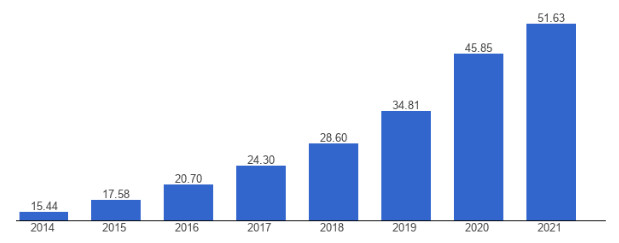
It is important to note that the data may vary slightly depending on the source. However, the overall trend of increasing internet users in Nepal is clear.
Despite Nepal's high regard for privacy, evident in the Asian community, escalating cyber usage prompts an increased demand for sophisticated security policies. However, cyber security threats in developing nations like Nepal persist due to poor digital access, institutional instability, and regime issues. The majority perceive inadequate cyber security policies, with 67% citing the absence of proper cyber laws. Slow progress in cyber law development is attributed to government skepticism towards email and computer transactions, coupled with outdated technology. The prevalent use of easily guessable passwords and reliance on the outdated Cyber Law Act of 2006/2007 exacerbates the cyber security challenges, emphasizing the urgent need for comprehensive and updated legislation in Nepal.
Challenges:
Weak Policies and Technology: Lack of effective policies, outdated software, and reliance on pirated software expose users to frequent cyberattacks like spamming, phishing, and password piracy.
Limited Awareness: Citizens and institutions lack awareness about cybersecurity best practices, making them vulnerable to threats. This includes unawareness of cyber laws and a lack of parental guidance for children's online activities.
Cost Concerns: Businesses and individuals prefer cheaper, pirated software, hindering investment in legitimate tools and security measures.
Resistance to Change: Fear of change, lack of understanding of new technologies, and generational gaps hinder the implementation of effective policies and updates.
Competition and Personal Interests: Competition among IT professionals and business interests can hinder collaboration and efficient solutions.
Solutions:
User Education and Self-Awareness: IT professionals emphasize user education and literacy as crucial solutions. This requires training, knowledge sharing, and raising awareness about online safety practices.
Strengthening Cyber Security Policies: The government needs to strengthen policies, improve regulations, and enforce existing laws effectively. This includes monitoring cyber cafes, addressing loopholes in cyber laws like lack of coverage for social media crimes, and focusing on areas like data privacy.
Investment in Technology and Infrastructure: Investing in genuine software, anti-virus solutions, regular system updates, and establishing data centers in Nepal can improve security.
Skilled Workforce Development: Building and retaining a skilled IT workforce in Nepal is crucial for both government and private sectors to effectively manage and respond to cyber threats.
Collaboration: Collaboration between the government, private sector, and international organizations is essential for knowledge sharing, resource allocation, and developing holistic solutions.
Conclusion:
Nepal's rapid technological advancement necessitates a comprehensive approach to address its cybersecurity challenges. By investing in user education, strengthening policies, upgrading technology, fostering collaboration, and developing a skilled workforce, Nepal can create a safer and more secure digital environment for everyone.


