


.gif)

Mahendranagar, 9 September
Job interviews are an opportunity to see allegiances shift in real-time. A candidate will usually refer to a prospective employer as “you” at the start of an interview (“What do you want to see from someone in this position?”). But occasionally the pronoun changes (“We should be thinking more about our approach to below-the-line marketing. Sorry, I mean ‘you’ should be”). That “we” is a tiny, time-traveling glimpse of someone imagining themselves as the employee of a new company, of a fresh identity being forged, and of loyalties being transferred.
Loyalty is seen as a virtue in most situations: among friends, family, and football fans. Employee loyalty, however, is more complex. It is more transactional. Friends don’t give each other performance reviews or fire each other for cost reasons. It is less reciprocal. A worker can feel an attachment to a company and a company can feel precisely nothing. (This is why people often feel more loyal to team members and individual bosses than to their organizations.) And too much of it can impose high costs.
Wage bumps and careers are built on people changing jobs. According to the Federal Reserve Bank of Atlanta, which tracks wage growth in America, in April job switchers were being paid 7.6% more than a year earlier; job stickers were being paid only 5.6% more. A little promiscuity on the part of other people can help those who choose to stay where they are. A paper by Nathan Deutscher, a Treasury official in Australia, found that higher rates of job-hopping in local Australian labor markets were associated with faster wage growth both for workers who switched jobs and for those who did not. Loyalty is nice; and so is bargaining power.
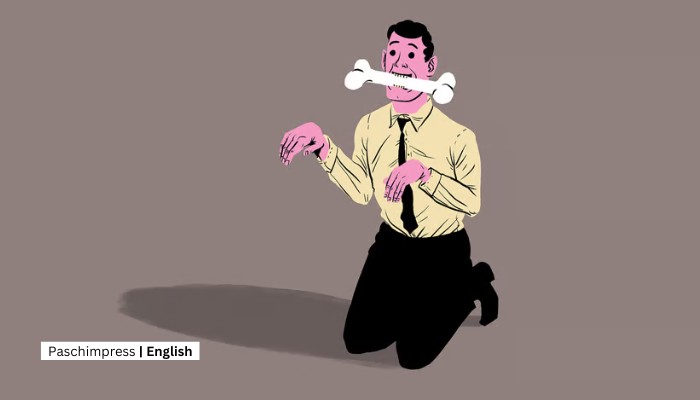
Too much loyalty can harm workers in other ways. A piece of research published earlier this year by Matthew Stanley of Duke University and his co-authors tested how bosses felt about loyal workers. The researchers asked managers how willing they were to ask a fictional employee named John to work overtime for no pay. If John was described as loyal, then bosses were happier to dump more work on him. The reverse also applied: Workers who did more work for no reward were more likely to be described by managers as loyal. Dogs are known for their loyalty, remember, but not for their brains.
Employers tend to be clear-eyed about what generates loyalty. Retention bonuses are an admission that the best employees might need a little nudge to stay. Actual loyalty tends to get nugatory rewards: a week’s extra holiday for 25 years of service? Netflix encourages its employees to speak to recruiters so that they know their worth in the open market and so that it can respond with counter-offers (an approach that makes more sense when you are prepared to pay top dollar and less so if you are in the non-profit sector).
Despite this, businesses may become devoted to the notion of loyalty. The "traitorous eight" were a group of workers who quit Shockley Semiconductor Lab in the 1950s to start Fairchild Semiconductor. Some of that mindset is still present. But joining a rival organization is neither treason nor heresy unless you are a mafia figurehead or a religious figure. Boomerang employees, or those who leave a job and then return, might in fact bring a great mix of experience and fresh abilities.
If there is an excess of employee loyalty, society may suffer. James Dungan from the University of Chicago and his co-authors published a paper on whistle-blowing in 2019 that found employees were more likely to report wrongdoing if they were concerned about fair treatment of people outside the organization and less likely to do so if they were more motivated by loyalty. According to additional studies, hostile competition can tempt devoted members of one group to lie or steal information in an effort to defeat another.
Employee loyalty can be great. Companies want workers who feel committed to them, who are prepared to go the extra mile and not join a rival at a moment’s notice. Workers want to believe in and belong at a firm, confident that it warrants chunks of their finite time on Earth. It is better all around, for job satisfaction and for performance, if employees stay put because they feel invested in their organization than because they haven’t got a better offer. But loyalty in the workplace is a self-interested decision, not a moral one. It should be contingent on being treated well, not a habit that becomes harder to break. Stay where you are because you like it, not because to leave would be immoral.
-From Economist


